Stretching across 39,000 square kilometres of southern Vietnam, the Mekong Delta has been shaped by empires, floods, and the resilience of millions who call it home. Here, where nine dragon-tongue rivers meet the sea, every canal carries a story thousands of years in the making.
Long before Vietnamese settlers arrived, the Mekong Delta was the heartland of the Funan Kingdom, one of Southeast Asia's earliest and most sophisticated civilisations. Flourishing between the 1st and 6th centuries CE, Funan was a powerful maritime trading state whose capital, Vyadhapura, sat near present-day Phnom Penh. Archaeological excavations at Óc Eo, a site in modern-day An Giang Province, have uncovered Roman coins, Indian jewellery, and Persian artefacts — remarkable proof that this waterlogged region was once a cosmopolitan crossroads of ancient global trade routes connecting the Indian Ocean to the South China Sea.
Following Funan's decline in the 6th century, the Khmer Empire absorbed the delta region, which they called 'Water Land' or Kampuchea Krom. Khmer communities built temples, managed elaborate irrigation systems, and cultivated wet-rice paddies across the alluvial plains for centuries. The delta remained firmly within the Khmer cultural and political sphere until the 17th century, when Vietnamese migration southward — driven by demographic pressure and royal expansion — began reshaping the ethnic, linguistic, and political landscape of this extraordinarily fertile land, setting the stage for centuries of cultural layering that defines the region today.
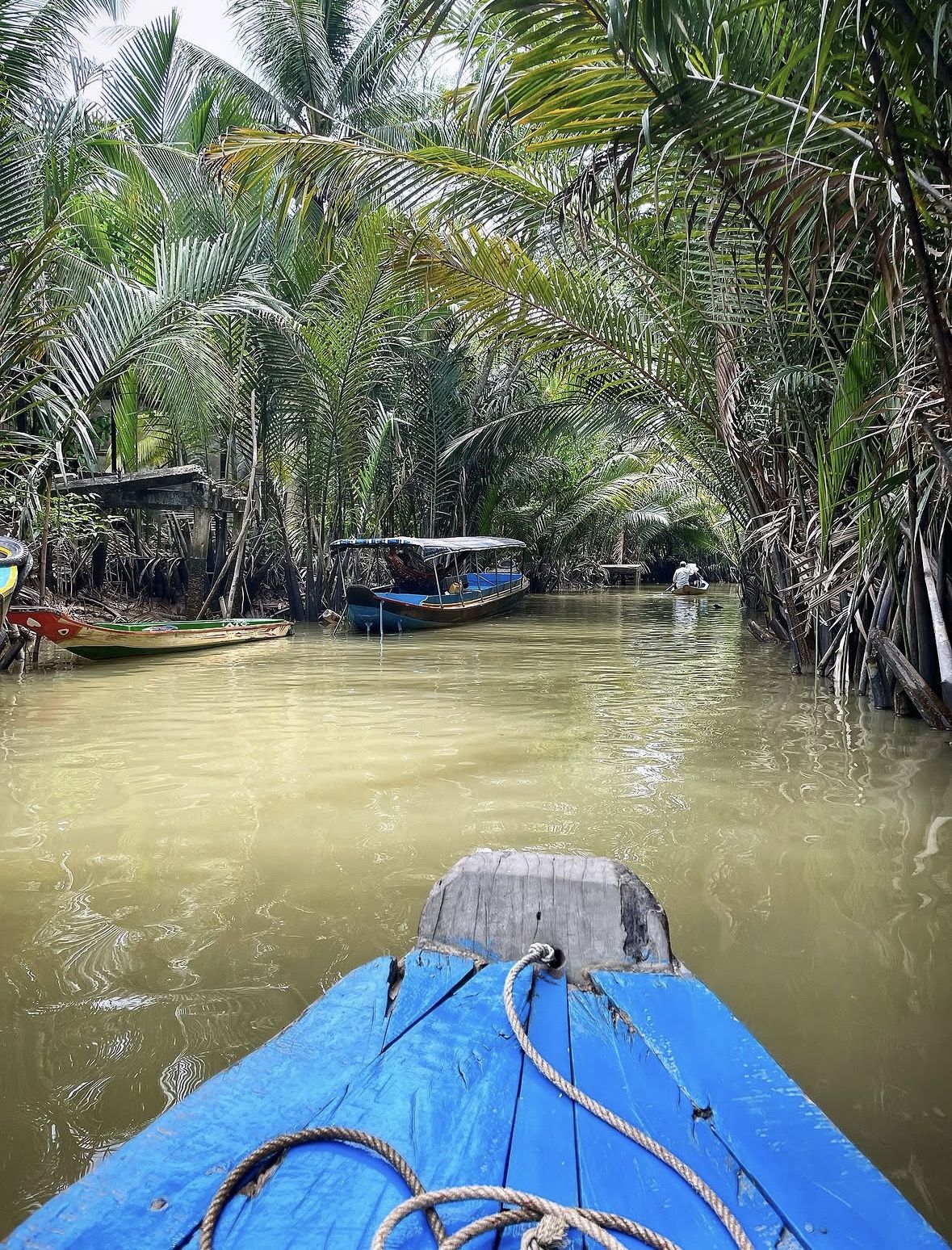
By the 17th century, Vietnamese lords known as the Nguyen Lords were actively encouraging settlers to move south into the sparsely populated delta. Chinese refugees fleeing the fall of the Ming Dynasty in 1644 also arrived in large numbers, establishing thriving merchant communities in towns like Ha Tien and My Tho. Ha Tien, founded around 1700 by the Chinese adventurer Mac Cuu, became a semi-autonomous principality and a centre of Vietnamese-Chinese literary culture. This blending of Viet, Khmer, and Chinese peoples created a uniquely multicultural society whose influences are still visible in the delta's food, architecture, festivals, and religious practices today.
The French colonial period, which began earnestly in the delta after the fall of Saigon in 1859 and the Treaty of Saigon in 1862, transformed the physical and economic landscape dramatically. French engineers constructed over 2,500 kilometres of canals to drain swampland and open new rice paddies, making the Mekong Delta the rice bowl of Indochina. Colonial architecture rose in Vinh Long, Can Tho, and My Tho. The French exported enormous quantities of Vietnamese rice to global markets while imposing heavy taxes on local farmers, fuelling deep resentment that would later feed powerful anti-colonial resistance movements throughout the 20th century.
The Mekong Delta was a crucible of religious and political movements unlike anywhere else in Vietnam. The Cao Dai faith, founded in 1926 and blending Buddhism, Taoism, Confucianism, and Christianity, gained millions of followers across the delta. The Hoa Hao Buddhist sect, founded in 1939 by Huynh Phu So in An Giang Province, attracted a deeply devoted peasant following and wielded considerable political influence. These homegrown spiritual movements reflected the delta people's independent spirit and their search for identity amid colonial rule, and both faiths remain vibrant and practised by millions of devotees in the region to this day.
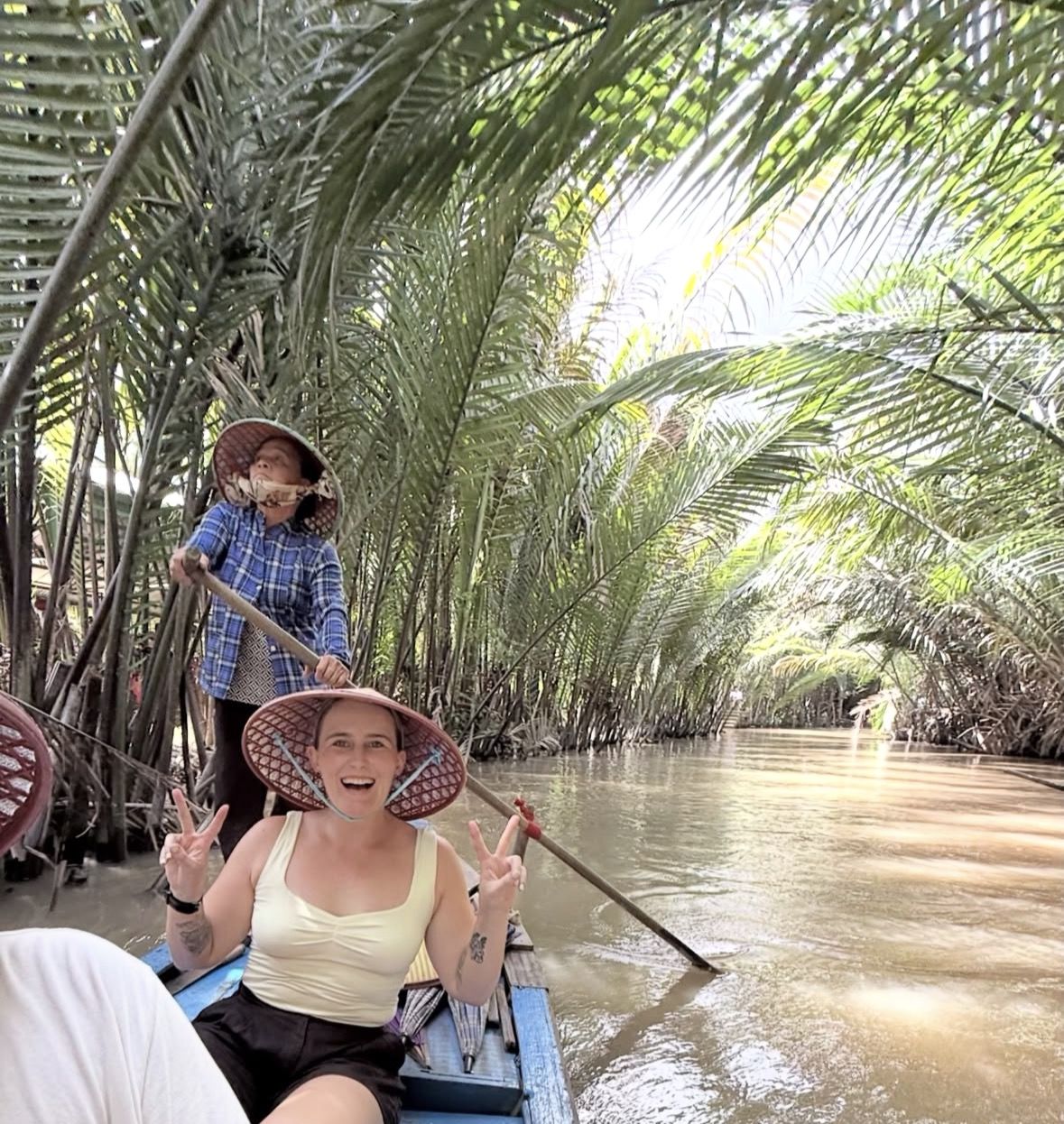
During the Vietnam War (1955–1975), the Mekong Delta was one of the most fiercely contested theatres of conflict. The Viet Cong maintained a strong presence among the rural population, using the labyrinthine waterways and dense mangrove forests as cover for guerrilla operations. The United States deployed its Brown Water Navy — a fleet of river patrol boats — to control the delta's waterways, and the region suffered devastating aerial bombardment and widespread use of Agent Orange defoliant. Provinces like Kien Giang, Ca Mau, and Ben Tre bore enormous human and environmental costs that took decades of painful recovery to begin to address.
Following reunification in 1975 and especially after the Doi Moi economic reforms of 1986, the Mekong Delta underwent a remarkable agricultural transformation. Investment in irrigation, hybrid rice varieties, and aquaculture turned the region into one of Asia's most productive food-producing zones. Vietnam became the world's second-largest rice exporter, with the delta at the core of that achievement. Shrimp and catfish — particularly the tra and basa species farmed in floating cages along the river — became major global export commodities, reshaping the economy and integrating the once-isolated delta into international supply chains and markets by the 1990s and 2000s.
Tourism began emerging as a significant economic force in the Mekong Delta during the 1990s, as international visitors arrived eager to explore floating markets, stilted villages, and orchid gardens. Can Tho's Cai Rang floating market, one of the largest in Southeast Asia, became an iconic image of Vietnamese river life. UNESCO's recognition of the broader Mekong region's ecological importance, combined with growing interest in sustainable and community-based tourism, brought fresh investment and infrastructure development. Today, the delta welcomes millions of domestic and international tourists annually, drawn by the authenticity of its village life, extraordinary biodiversity, and deeply layered cultural heritage.
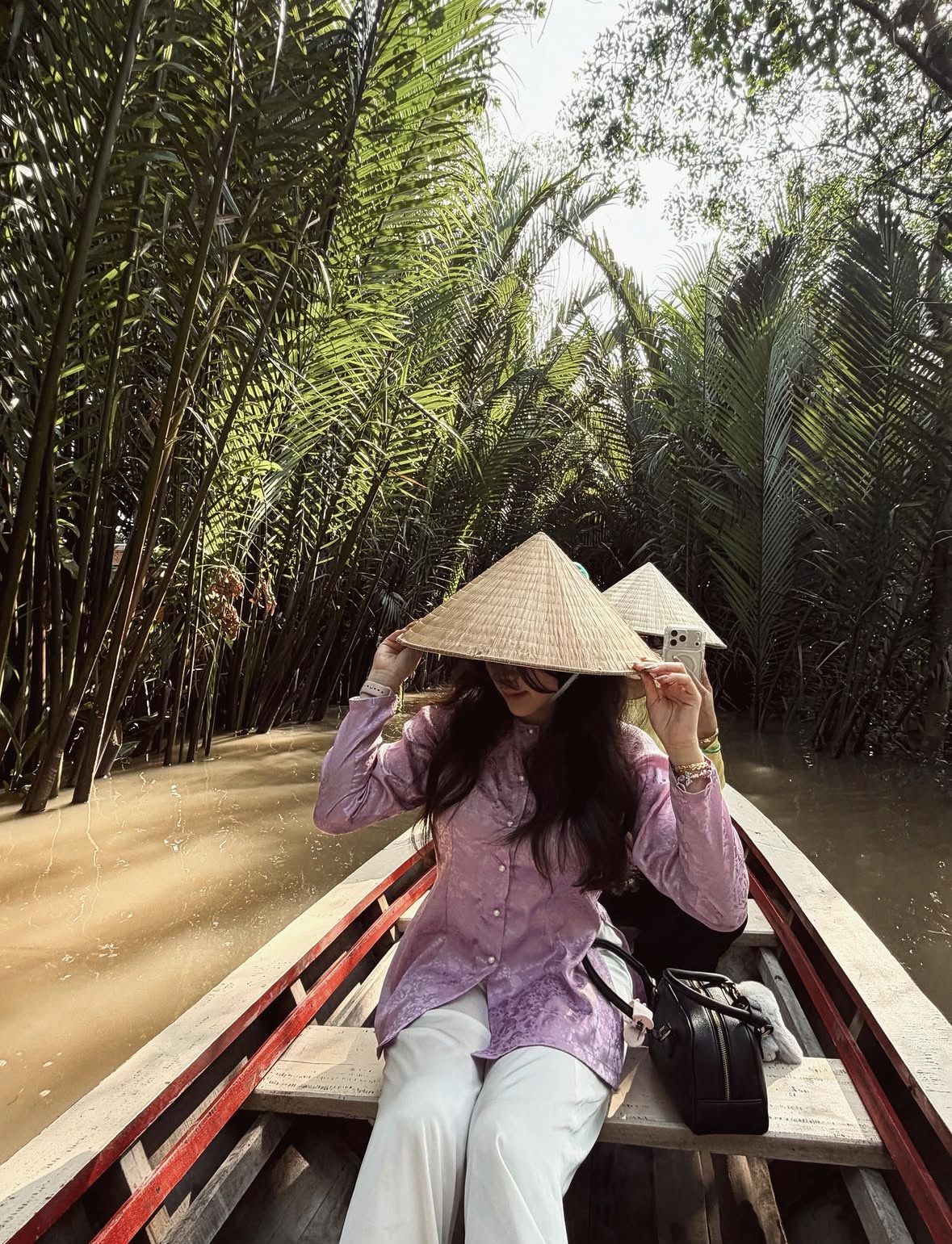
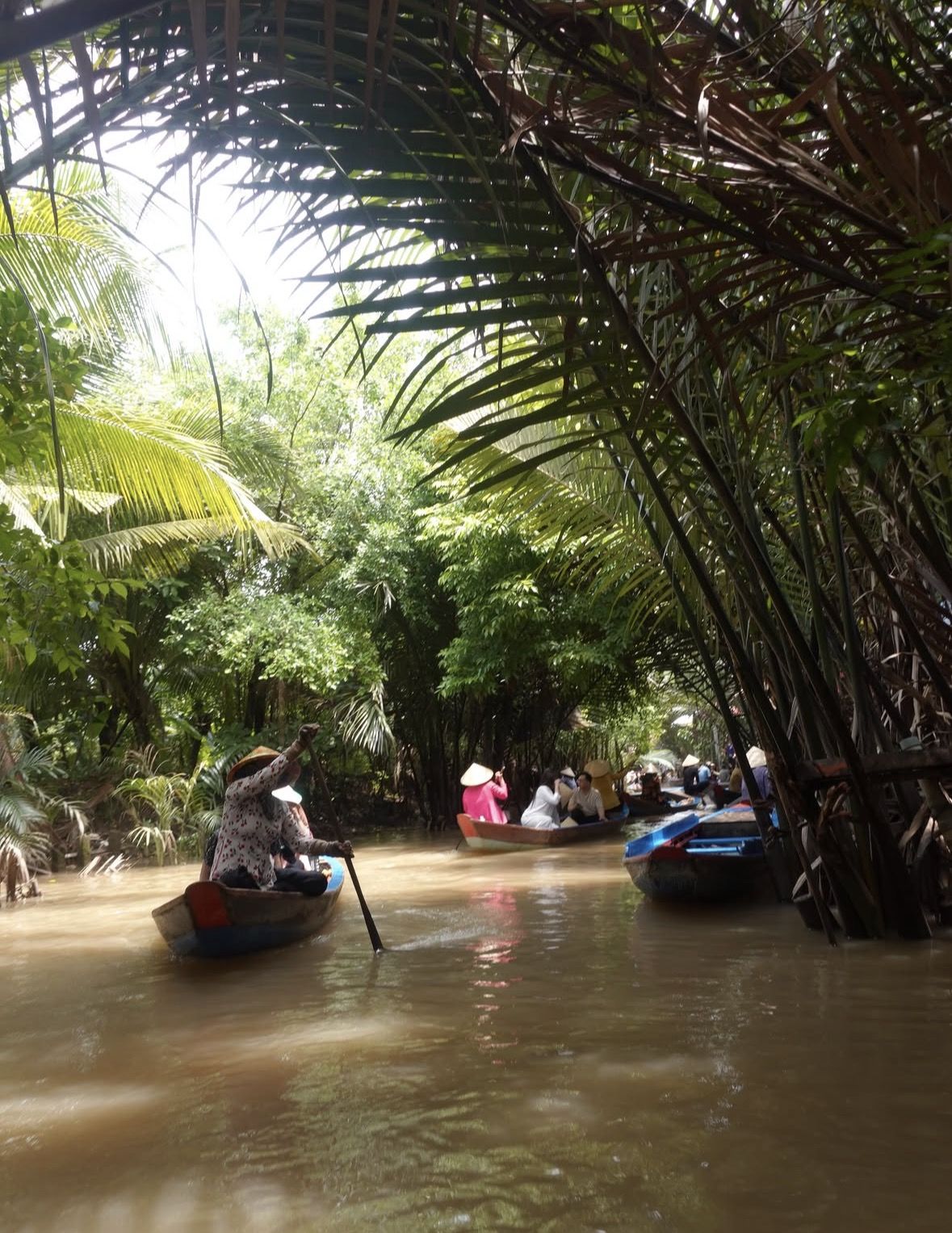
The Mekong Delta of the 21st century is a place of profound contrasts and extraordinary vitality. Ancient Khmer temples stand beside Vietnamese pagodas and Chinese assembly halls in towns that hum with motorbike traffic and river commerce. Floating markets still open before dawn, vendors trading watermelons, durians, and pineapples from low wooden boats. Yet the delta faces urgent modern challenges: rising sea levels, saltwater intrusion, and reduced sediment flow caused by upstream dams are threatening the very land that generations of farmers and fisherfolk have depended upon, making every visit to this world feel both timeless and quietly precious.
Visiting the Mekong Delta today means stepping into a living museum of Vietnamese history, culture, and natural wonder. You can cycle through coconut-palm shaded lanes in Ben Tre, sample freshwater elephant-ear fish in Can Tho, kayak through mangrove tunnels in Ca Mau, or attend a Khmer Buddhist ceremony in Soc Trang. The people of the delta — warm, resilient, and enormously proud of their heritage — welcome travellers with a generosity that is itself a reflection of this land's abundant spirit. Come before the world changes too much, and let the Mekong's nine rivers carry you into one of Asia's most unforgettable stories.
Ready to Experience It Yourself?
From dawn floating markets to ancient Khmer temples and mangrove wilderness, the Mekong Delta rewards every curious traveller with experiences that simply cannot be found anywhere else on earth. Our handpicked local tour partners offer expertly guided boat tours, cycling adventures, and overnight homestays that take you deep into the heart of this extraordinary region. Book your Mekong Delta tour today and let the river tell you its story firsthand.
Book Your Tour Now